The Resurrection Of Pueblo Errante
Truth be told, this is Pueblo Errante’s second go. For some unknown reason I got it in my head that this piece needed to look like it was made of stone, like an ancient city. Well, let’s just say, that didn’t work out so well. I had to remove the original canvas and some of the wood went with it. I was so mad at myself, it sat for 6 six years in it’s bare bones. I can tell you first hand, if it’s not broke, why fix it?
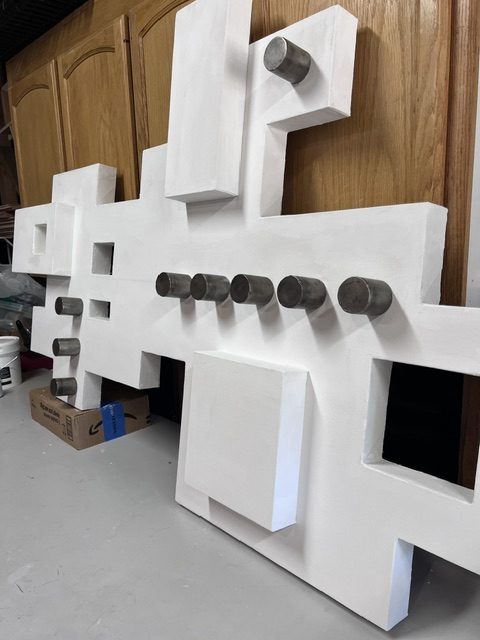
Here we are today, Pueblo Errante with a brand new stretched canvas as good as new. All it needs next is the paint. Stay tune for that.
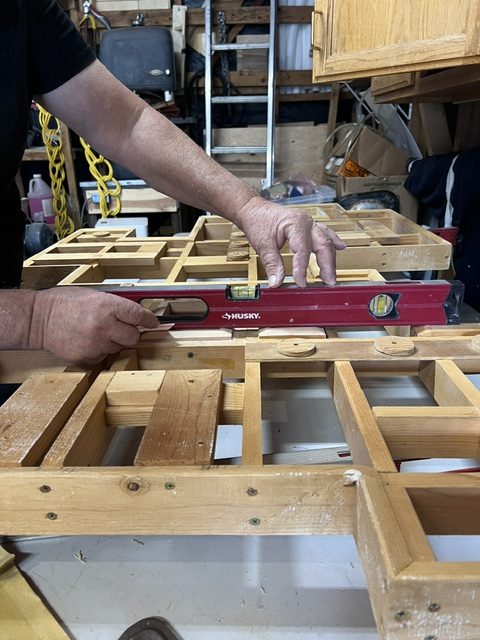
When you look at a finished piece of art, you usually only see the final layer of paint. For my latest 66” x 44” geometric painting, the build process behind the scenes was a major part of the project. I wanted to share a look at the wooden frame that makes this 5-inch deep artwork possible.
Building an asymmetrical canvas with a stepped silhouette requires custom woodworking and precise geometry. You cannot buy a frame like this at an art store.
Building the Frame
To support the shifting blocks and cutouts on the front, I built a heavy-duty internal wooden grid.
I chose high-quality pine for the structure. Pine is strong enough to handle the tension of tight canvas without warping, but it keeps the final piece light enough to safely hang on a wall. Every right-angle turn, corner, and recessed window had to be individually cut, measured, braced and edges are beveled.
Stretching the Canvas
Stretching raw canvas over an irregular, multi-layered shape is a slow process. Instead of pulling the fabric straight back over a flat square, I had to work around several different planes.
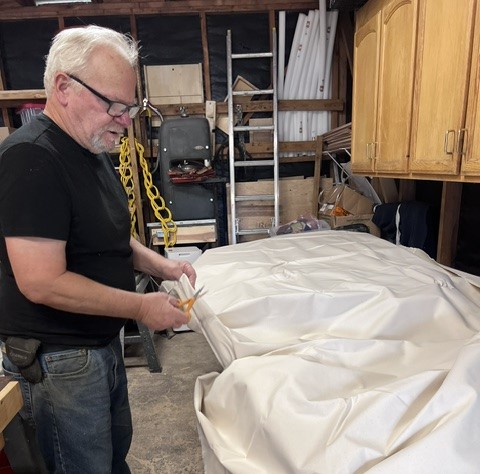
Every inside corner had to be precisely cut, folded, and stapled to keep the front surfaces smooth and tight. It feels a bit like upholstery work. Every fold has to align perfectly with the wooden angles underneath to maintain clean geometric lines.
It takes a lot of workshop hours to get the framework right, but this hidden structure is exactly what allows the final painting to project five inches off the wall.
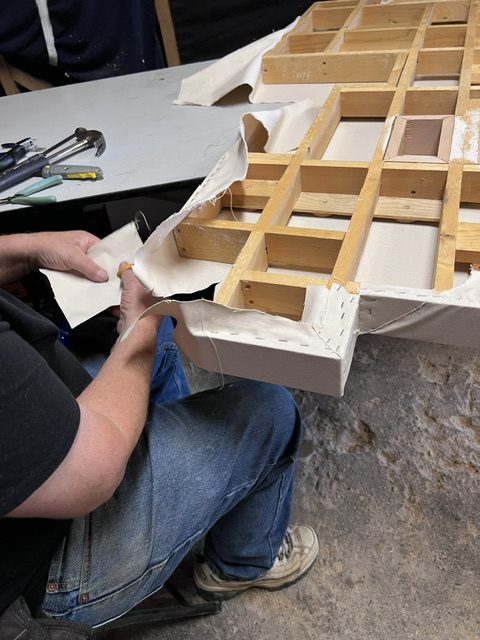
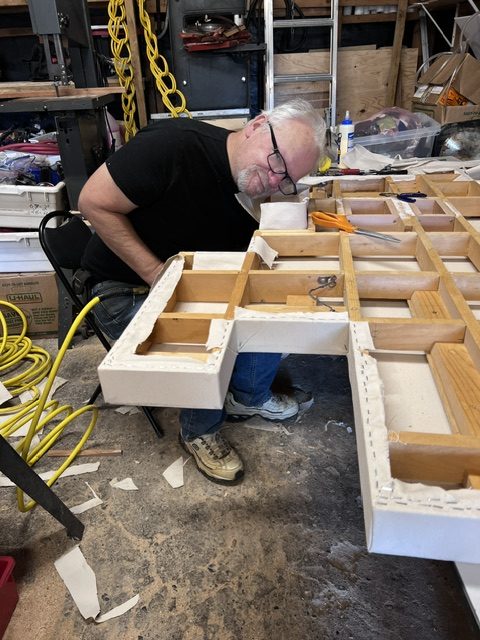
I would love to hear your thoughts. Does seeing how a shaped canvas is built change how you look at the final artwork?
Let me know in the comments below.


Leave a Reply